
Table of Contents
Introduction
In today’s technology-driven world, the traditional office is no longer the only place where businesses can operate successfully. Entrepreneurs, freelancers and professionals are increasingly choosing to work from home because of the flexibility, convenience and opportunities it offers.
However, creating an effective home office requires more than placing a desk and computer in an available room. A productive workspace should support concentration, encourage creativity, provide reliable technology and maintain a healthy balance between professional and personal life.
Whether you are planning to relocate, renovate your existing property or upgrade your home office with modern technology, the right decisions can make a significant difference. This guide explores practical ways to create a comfortable, efficient and business-friendly home workspace.
Weighing Your Options: Relocation for Business Expansion
Running a business from home can become challenging as your operations grow. You may need additional workspace, storage facilities, a separate meeting area or room for employees. In such situations, relocating to a more suitable property may be worth considering.
Before moving, evaluate the financial and practical implications. Direct expenses may include property costs, deposits, moving services, furniture and equipment. Indirect expenses can include temporary business interruptions, changes to internet services and the time required to organise the new workspace.
Consider the following factors before making a decision:
- Available space: Determine whether your current property can accommodate your business requirements.
- Location: Consider internet availability, transport connections and access to suppliers or customers.
- Financial impact: Compare moving costs with the long-term benefits of having a larger workspace.
- Business continuity: Plan the relocation carefully to minimise disruption to clients and daily operations.
- Future growth: Choose a property that can support your expected business requirements.
Relocation should be based on genuine business needs rather than simply wanting a different environment. A well-planned move can provide room for expansion while maintaining operational efficiency.
Home Makeover on a Budget: Renovate for Success
Moving to another property is not always necessary. In many cases, a few carefully planned improvements can transform an existing room into a functional home office.
Start by identifying the biggest limitations of your current workspace. These might include poor lighting, limited storage, insufficient electrical outlets or a lack of privacy.
Consider these budget-friendly improvements:
- Create multifunctional spaces: Use compact desks, wall-mounted shelves and foldable furniture to make the most of limited space.
- Improve lighting: Add suitable task lighting and make better use of natural daylight.
- Upgrade storage: Use cabinets, organisers and shelves to keep important documents and equipment accessible.
- Improve energy efficiency: Choose energy-efficient lighting and equipment to help manage electricity consumption.
- Reduce unnecessary clutter: Remove items that do not contribute to your work or daily operations.
Before starting renovations, establish a realistic budget and prioritise improvements that will have the greatest practical impact. You do not need expensive furniture or major construction work to create a comfortable professional environment.
Inspiring Productivity: Designing Your Perfect Home Office
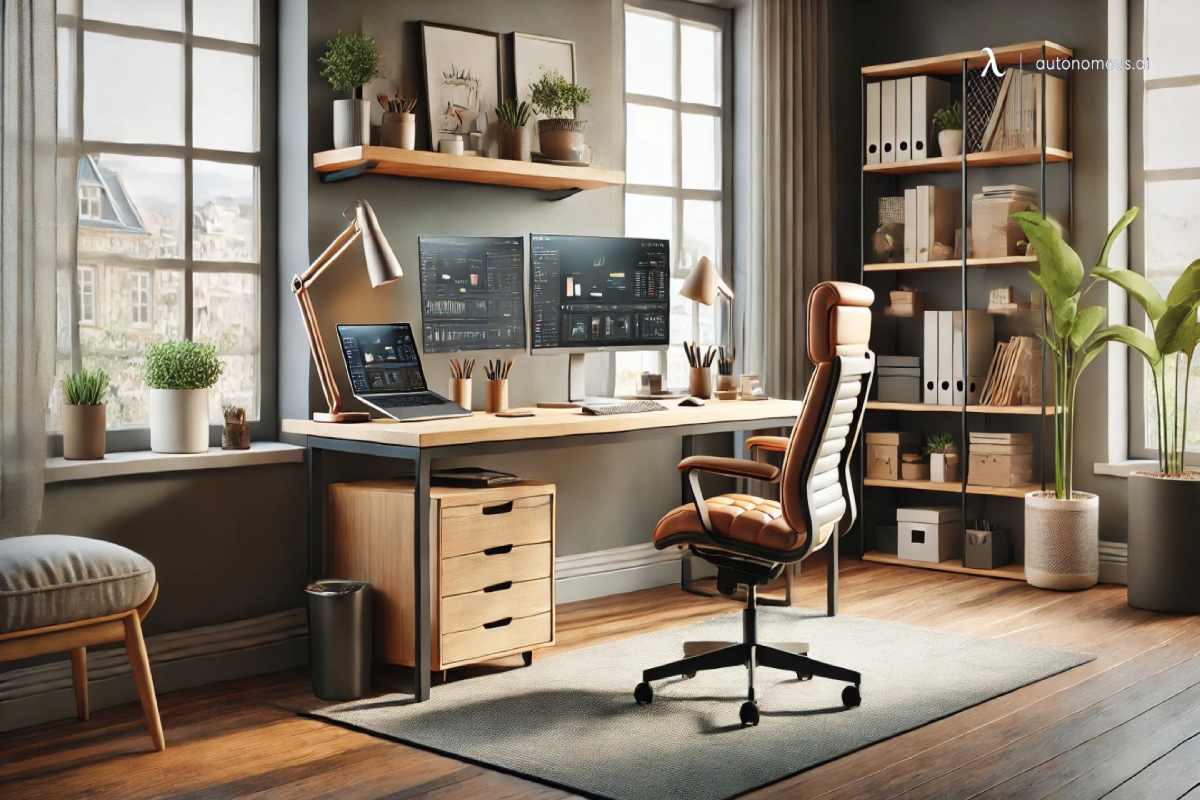
The design of your home office can influence your productivity, comfort and overall working experience. A well-organised environment makes it easier to concentrate and manage daily responsibilities.
Choose the Right Location
Select a quiet area where household activities are less likely to interrupt your work. If possible, use a separate room with a door. If space is limited, designate a specific corner exclusively for professional activities.
A consistent workspace also helps establish a mental distinction between working hours and personal time.
Invest in Ergonomic Furniture
An ergonomic chair and a suitable desk are important investments for anyone who spends several hours working at a computer.
Look for a chair with adjustable height, suitable back support and comfortable armrests. Position your monitor at an appropriate height and keep your keyboard and mouse within easy reach.
You can also consider a sit-stand desk to change your working position throughout the day. Remember to take regular movement breaks rather than remaining seated for extended periods.
Make the Most of Natural Light
Natural light can make a home office feel more comfortable and welcoming. Position your desk near a window where possible, while avoiding glare on your computer screen.
If natural lighting is limited, use a desk lamp that provides sufficient illumination for reading and computer work.
Personalise Your Workspace
Your home office should reflect your working style and preferences. Plants, artwork, photographs and simple decorative elements can make the environment more inviting.
However, avoid excessive decoration that takes up valuable desk space or distracts you from important tasks.
Smart Solutions: Technology Upgrades for a Cutting-Edge Home Office
Technology is an essential part of modern home-based businesses. Reliable equipment and digital tools can improve communication, simplify operations and help you manage work more efficiently.
Upgrade Your Internet Connection
A stable internet connection is essential for video meetings, cloud-based applications, online transactions and file sharing.
Choose an internet plan that suits your business requirements. If your work involves frequent video conferences or large file transfers, consider a connection with sufficient speed and reliability.
A backup internet option can also help reduce disruption during unexpected outages.
Use Smart Office Devices
Smart devices can make everyday office tasks more convenient. Depending on your requirements, you might use smart lighting, voice assistants, wireless printers or automated power management systems.
These devices can help streamline routine activities, but choose them carefully. Technology should solve genuine problems rather than introduce unnecessary complexity.
Adopt Modern Collaboration Tools
Remote teams often depend on digital platforms to share information, manage projects and communicate with colleagues.
Tools such as Microsoft Teams, Zoom, Slack and project management applications can support meetings, collaboration and task tracking.
Businesses looking to understand the wider benefits of technology can explore reaping the rewards of technological innovation, including how technological improvements can support business efficiency and growth.
Strengthen Cybersecurity
Working from home does not remove the responsibility to protect business information. Use strong passwords, multi-factor authentication and updated security software.
Secure your Wi-Fi network and avoid accessing confidential company information through untrusted public connections. Regular backups can also help protect important files against accidental loss or technical problems.
Navigating Legalities: Zoning Laws for Home-Based Businesses
Before making major changes to your property or starting a business from home, check the local regulations that apply to your location.
Zoning rules and other local requirements may affect the type of business activities permitted in residential properties. Restrictions can relate to customer visits, employees working on-site, signage, noise, storage and changes to the building.
Depending on your business and location, you may also need to consider:
- Local business registration requirements
- Residential property or lease conditions
- Building permissions for structural renovations
- Health and safety requirements
- Tax and accounting obligations
- Insurance coverage for business equipment and activities
Requirements vary by location, so consult the relevant local authority or a qualified professional before making significant changes.
Planning ahead can help you avoid unexpected expenses and ensure that your home-based business operates appropriately.
Green Choices for the Conscious Entrepreneur
A sustainable home office can reduce unnecessary resource consumption while creating a comfortable working environment.
Start with simple improvements, such as switching to energy-efficient lighting, using rechargeable accessories and turning off equipment when it is not needed.
You can also consider furniture made from responsibly sourced wood, bamboo or recycled materials. Choosing durable furniture instead of frequently replacing inexpensive items can reduce waste over time.
Biophilic design is another useful approach. Adding indoor plants, natural textures and appropriate natural lighting can make your workspace feel more connected to the outdoors.
Consider these practical sustainability measures:
- Choose energy-efficient computers and office equipment.
- Reduce paper consumption by using digital documents.
- Reuse suitable furniture and accessories.
- Select durable products with longer lifespans.
- Improve natural ventilation where practical.
- Recycle electronic waste through appropriate collection services.
Sustainability does not require expensive changes. Small improvements made consistently can create a more responsible working environment.
Financial Fluidity: Streamlining Payments for Your Home Business
Managing payments efficiently is essential for maintaining the financial stability of a home-based business. Delayed invoices, unclear payment terms and manual record-keeping can create unnecessary administrative work.
Start by communicating your payment terms clearly. Explain accepted payment methods, invoice due dates and any applicable late-payment conditions before beginning work with a client.
You can improve your invoicing process through the following practices:
Use Invoice Templates
An invoice template helps you create professional documents with consistent information. Include your business details, client information, invoice number, service description, payment amount and due date.
Automate Recurring Invoices
If you provide monthly services or ongoing subscriptions, automated invoicing can reduce repetitive administrative tasks and help ensure that invoices are sent on time.
Offer Convenient Payment Options
Online payment methods can make it easier for customers to settle invoices. Choose reliable payment providers and communicate the available options clearly.
Maintain Accurate Financial Records
Keep copies of invoices, receipts, expenses and payment confirmations. Organised financial records make it easier to monitor cash flow and prepare reports or tax documents.
You can also explore free invoice-making tools that offer ready-made templates and customisation features. Before choosing a platform, review its pricing, security and available features.
Build a Productive Remote Working Routine
A well-designed office is only one part of running a successful home-based business. You also need routines that help you manage your time, responsibilities and communication.
Set consistent working hours and organise daily priorities. Take regular breaks and avoid allowing professional responsibilities to interfere continuously with personal time.
If you work with employees or contractors, establish clear communication practices and expectations. Regular check-ins, shared project updates and suitable collaboration tools can help everyone remain informed.
For additional practical guidance, read these tips for optimising remote work, which cover productivity, communication and maintaining work-life balance.
Businesses with growing teams should also pay attention to employee development, motivation and retention. Effective talent management in achieving business success can help organisations build capable teams and support long-term performance.
Conclusion
Creating an effective home office is about building an environment that supports your business ambitions and personal well-being. From choosing the right location and improving your workspace to adopting modern technology and managing finances, every decision can contribute to a more productive working experience.
You do not need to make every improvement at once. Start by identifying the most important challenges in your current setup and address them within your available budget.
With thoughtful planning, suitable equipment, secure technology and consistent working routines, your home can become a comfortable and efficient base for business growth. Ultimately, a successful home office is not simply a place to work; it is an environment that helps you turn your professional goals into reality.