
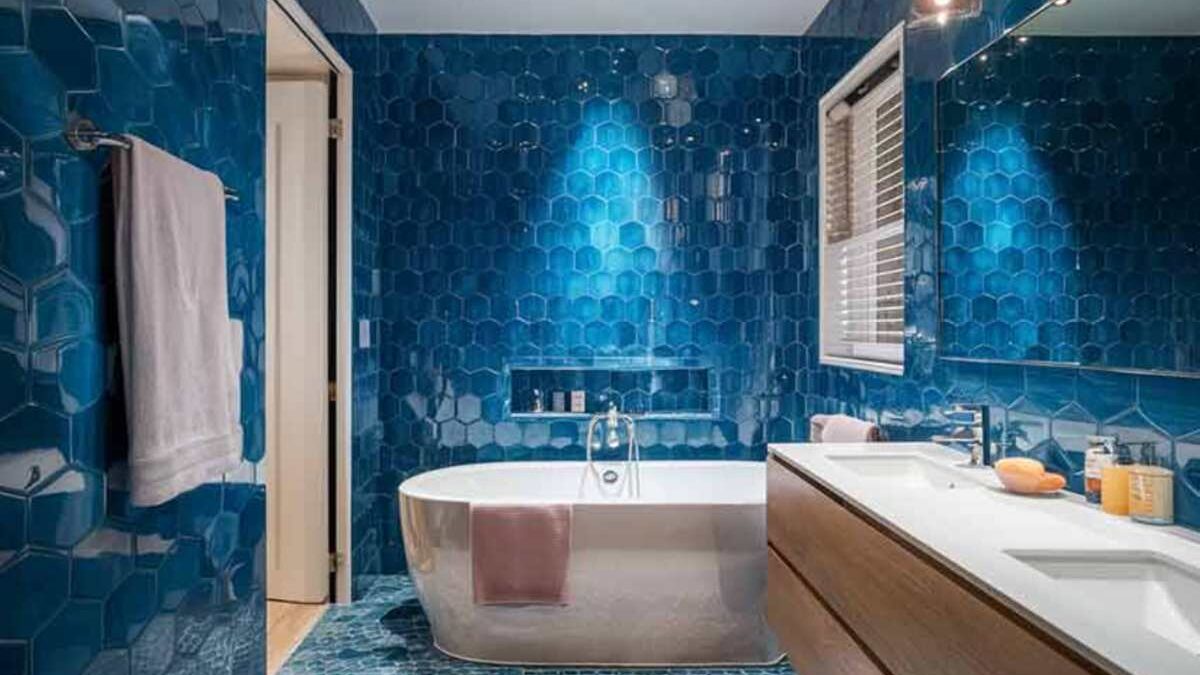
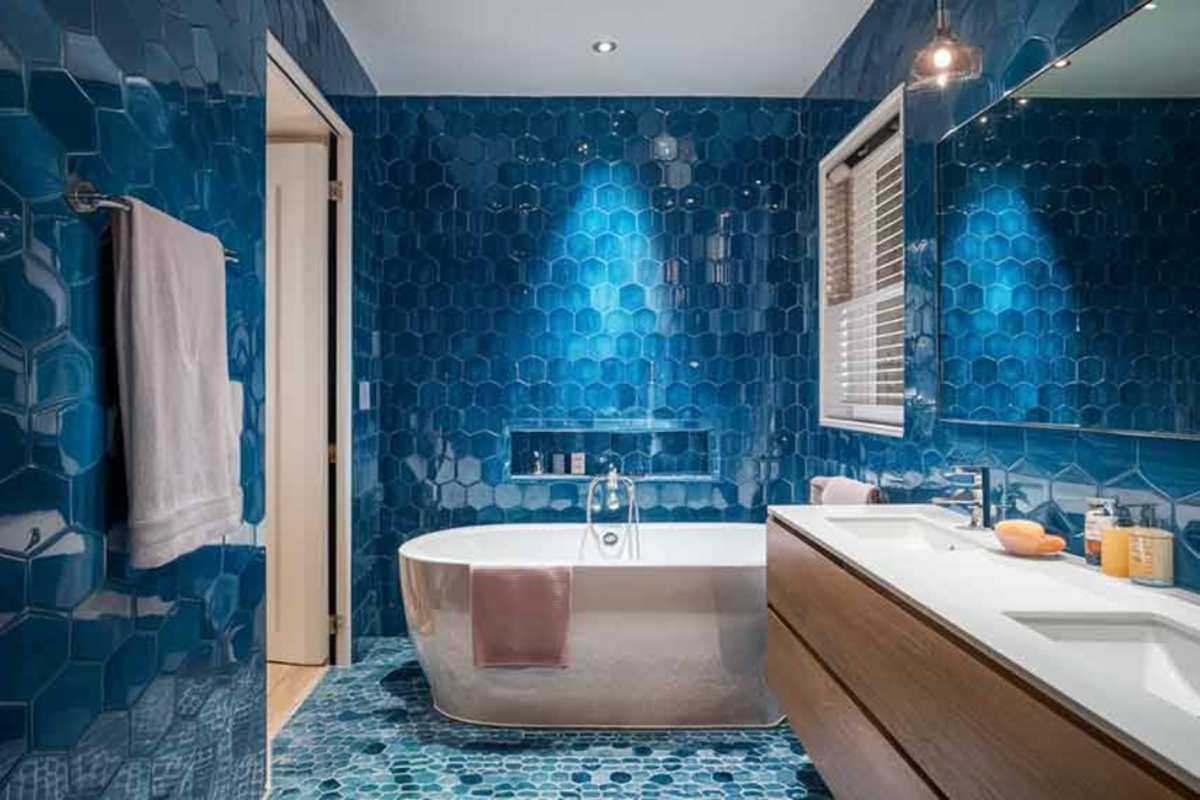
The modern bathroom has transitioned from a strictly utilitarian facility into a sophisticated sanctuary dedicated to restoration and personal care. When it comes to creating an atmosphere that feels both refreshing and timeless, blue bathroom tiles are an unparalleled choice. From the deep, mysterious tones of the ocean to the pale, airy shades of a morning sky, blue offers a versatile palette that can transform any bathroom into a designer masterpiece.
Whether you are planning a full-scale renovation or a simple backsplash update, choosing the right shade and texture of blue tile can significantly impact your home’s mood.
Table of Contents
Why Choose Blue for Your Bathroom?
From a design perspective, blue is a receding colour. This characteristic is particularly advantageous in bathrooms, which are often the smallest rooms in a residence. Using quality surfaces, such as bathroom tiles blue colour options from Simpolo Tiles & Bathware, can enhance this effect. Cool-toned blue surfaces tend to move visually away from the observer, creating an illusion of greater volume and depth. Furthermore, blue is naturally associated with water and hygiene, reinforcing a sense of cleanliness essential to a high-traffic wet area
- Versatility: Blue serves as a sophisticated foundation that accommodates a range of materials, including natural timber, marble, and metallic finishes such as brushed brass or matte black.
- Timeless Appeal: While specific design trends fluctuate, blue remains a staple in interior architecture, ensuring the installation remains relevant for years to come.
- Broad Spectrum: The range of available tones supports diverse applications, from rustic Mediterranean textures to ultra-modern minimalist aesthetics.
Popular Shades of Blue Bathroom Tiles
Selecting the appropriate saturation and pigment is a critical phase of the design process. Each shade serves a distinct architectural purpose and responds differently to lighting conditions.
1. Navy and Midnight Blue
Deep, saturated blues are frequently employed to create a sense of grounded luxury. These tones function exceptionally well as feature walls or for floor-to-ceiling applications in master suites. To optimize the aesthetic, these should be paired with high-contrast elements such as white porcelain or polished chrome fixtures to prevent the space from feeling overly enclosed.
2. Turquoise and Teal
For a more vibrant and energetic environment, turquoise and teal offer a refreshing alternative. These shades are highly effective when utilised in mosaic patterns or “fish scale” (meridian) shapes, introducing organic movement and a maritime influence to the space.
3. Powder Blue and Sky Blue
Lighter hues are preferred for guest bathrooms or areas without natural light. These shades reflect both artificial and natural light efficiently, ensuring the room remains bright and inviting. Glossy finishes in these colours can mimic the reflective properties of water, further enhancing the spa-inspired environment.
4. Slate and Steel Blue
For those seeking a contemporary or industrial aesthetic, blues with grey undertones offer a muted elegance. These shades are highly effective in large-format porcelain slabs, which minimise grout lines and provide a seamless, stone-like appearance.
Creative Layouts and Patterns
The orientation and shape of the tile are significant contributors to the final design outcome. By deviating from standard horizontal placements, you can introduce architectural interest and direct the eye through the space.
| Pattern | Best For | Design Objective |
| Herringbone | Shower Walls / Backsplashes | Adds sophisticated texture and visual depth. |
| Vertical Stack | Low-Ceiling Enclosures | Elongates the wall, increasing perceived height. |
| Chevron | Large Floor Areas | Creates dynamic movement and a high-end finish. |
| Hexagon | Feature Floors | Offers a geometric, modern focal point. |
Materials and Textures
Texture plays a significant role in how colour is perceived within a room. Glossy bathroom tiles reflect light, appearing more vibrant, whereas a matte finish provides a grounded, saturated appearance.
- Glass Tiles: Frequently utilised in mosaics, glass tiles possess a luminous quality that complements water-centric environments, making them ideal for shower enclosures.
- Ceramic and Porcelain: These represent the most durable and versatile options. Ceramic tiles are particularly noted for their handcrafted, iridescent finish, which catches light at varying angles.
- Encaustic Cement Tiles: Often featuring intricate geometric or floral motifs, these tiles serve as durable, decorative centrepieces for bathroom flooring.
Design Tips for a Cohesive Look
To ensure the blue elements harmonise with the overall design, consider the following professional styling strategies:
- Neutral Balances: Utilise white or light grey grout to define the tile shape and provide visual clarity. If dark blue tiles are selected, light-coloured cabinetry can provide a much-needed visual reprieve.
- Natural Elements: The combination of blue and wood creates a balanced, biophilic design. A teak or walnut vanity softens the coolness of the tiles and adds organic warmth.
- Lighting Considerations: Blue pigments are highly sensitive to colour temperature. It is advisable to evaluate tile samples under both warm (yellow) and cool (white) lighting to ensure the desired effect is achieved.
- Strategic Accents: For a more subtle integration, blue tiles may be applied to recessed shower niches or used as a decorative border rather than a full-surface application.
Maintenance and Longevity
While blue tiles are generally straightforward to maintain, darker variations may highlight water spots or mineral deposits more readily than lighter colours. Selecting a satin or textured finish can mitigate the visibility of these imperfections. Furthermore, applying a high-quality sealant to grout lines is essential to prevent discolouration and maintain the installation’s integrity over time.
Conclusion
The use of blue bathroom tiles is a sophisticated way to elevate a home’s aesthetic while ensuring the space remains a timeless asset. By carefully selecting the appropriate saturation, finish, and layout, you can transform a functional area into an architectural statement of serenity and style.